
.svg)

Megaformer vs. Reformer: What Is the Difference?
Two Machines, Two Different Goals
If you have spent time around fitness studios in the last few years, you have probably seen both machines. They look similar enough that most people assume they are variations of the same thing. Same general shape, same sliding carriage, same presence in a room full of grip socks. They are not the same thing. The differences are meaningful, and understanding them helps you figure out which workout is right for what you are trying to accomplish.
This is not a ranking. Both have real value. They were built for different purposes, they train the body differently, and they produce different results. If you are deciding between them or trying to understand why someone you know swears by one over the other, here is the clear breakdown.
Where Both Machines Come From
The Pilates reformer has been around for nearly a century. Joseph Pilates developed it in the early 20th century as part of a broader movement system he called Contrology. The original machine was built from a hospital bed and used springs to create resistance. The goal was rehabilitative: to help injured soldiers and later dancers and athletes rebuild strength and movement quality in a controlled, joint-friendly way.
The Megaformer came about a century later. Sebastien Lagree, a trainer working in Los Angeles, wanted to combine the structural intelligence of Pilates with the intensity needed to produce real physical transformation. He used the reformer as a starting point and rebuilt it into something substantially different. The Megaformer is a patented machine, designed specifically to support the Lagree Method. Lagree Fitness now holds over 80 patents on its equipment and methodology. The lineage is connected but the destination is different.
What the Reformer Is
The Pilates reformer is a rectangular frame with a sliding carriage in the center. The carriage moves along rails and is attached to springs that provide resistance or assistance depending on the exercise and spring setting. At one end there is a footbar. At the other, a set of ropes and pulleys. The springs range from very light to moderate tension, and part of the skill in Pilates is learning which spring configuration suits which exercise and which body.
The reformer is a precise instrument. In the hands of a skilled Pilates instructor, it can be used to target specific muscles, correct movement imbalances, build core stability, improve posture, and support rehabilitation. Classical Pilates on a reformer is disciplined, detail-oriented work with a long and well-earned tradition.
What the Megaformer Is
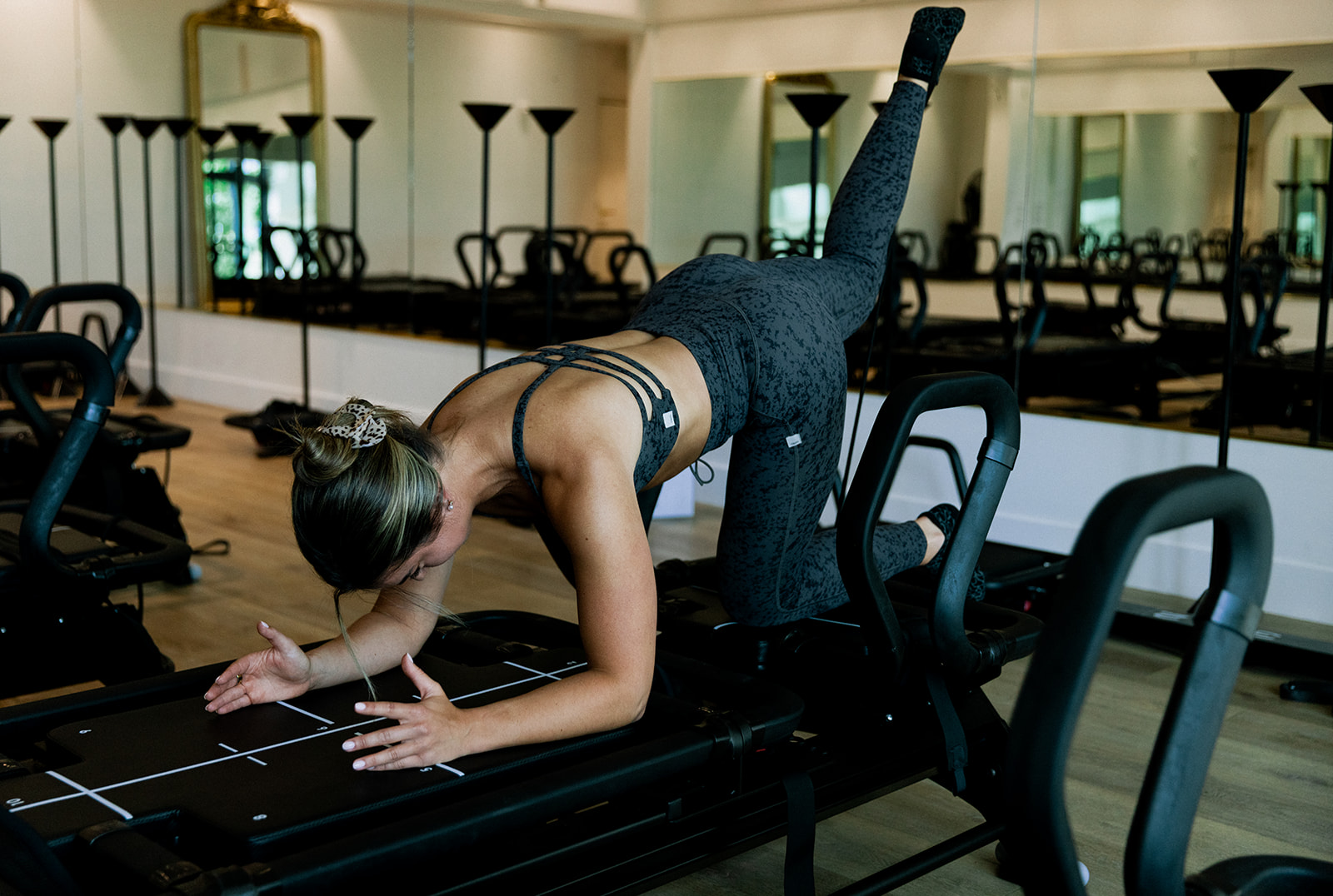
The Megaformer is larger, heavier, and mechanically more complex than a reformer. It has two platforms rather than one, more points of attachment, and a resistance system that supports significantly heavier loads. Where the reformer uses springs primarily to assist or lightly resist movement, the Megaformer uses heavy spring resistance combined with bodyweight and gravity to create constant, significant load on the muscles.
The carriage on a Megaformer is more versatile. It can be loaded from both ends, allowing for a wider range of movement patterns. One of the most important mechanical differences is stability. The Megaformer is built to remain still while the body works against it. Controlling the carriage, keeping it from moving when your muscles fatigue and want to let it slide, is itself a major component of the workout. That distinction changes the entire experience of using it.
The Megaformer is not a modified reformer. It is a different machine built around a different theory of how to produce results. Both are legitimate pieces of equipment with genuine value. They were designed to do different things.
The Training Principles: Where the Real Difference Lives
Tempo. Pilates uses varied tempos. Some exercises are slow and sustained, others involve quicker pulses or dynamic movement. The pace shifts throughout a class. Lagree uses one tempo: slow. Two seconds in each direction, throughout every exercise, for the entire class. The slow tempo removes momentum and forces the muscle to generate all of the force itself.
Resistance load. Reformer Pilates typically works with lighter spring tension, particularly for foundational and rehabilitative exercises. The emphasis is on precision and range of motion. Lagree uses heavier resistance throughout. The springs on a Megaformer are calibrated for load, and the exercises are designed to create muscular fatigue within a 45 to 90 second window.
Time under tension. Time under tension refers to how long a muscle is actively working during a set. Research consistently shows that longer time under tension produces greater muscle development and endurance. Lagree is built entirely around maximizing time under tension. The slow tempo, heavy resistance, and sustained holds all work together to keep the muscle working longer per exercise than almost any other training format. Each set lasts at least 60 seconds to stimulate both fast and slow-twitch muscle fibers.
Impact. Both methods are low impact. Neither involves jumping, heavy spinal loading, or repetitive joint stress. This is something they genuinely share. The difference is that Lagree achieves much higher intensity within that low-impact framework. The muscular demand of a Lagree class is closer to what you would feel after a hard weightlifting session than after a Pilates class, even though neither involves dropping anything on the floor.
What Each Method Produces
After several months of consistent training, the results from each method reflect what they are designed for. Regular reformer Pilates tends to produce improvements in posture, flexibility, core stability, and movement quality. People who practice it consistently often report less back pain, better body awareness, and a general sense of physical ease.
Regular Lagree tends to produce more significant and faster changes in muscle tone, strength, and body composition. The higher resistance loads and sustained time under tension create the stimulus the body needs to build lean muscle. Core strength improves dramatically, as does endurance across all major muscle groups. Most clients training Lagree two to three times per week report visible changes within four to six weeks. Neither outcome is better in an absolute sense. They reflect different priorities.
Can You Do Both?
Yes, and some people find the combination works well. Pilates builds the kind of precise body awareness and movement control that makes Lagree more effective. Lagree builds the strength and endurance that makes everyday movement easier. If budget and time are factors, the question becomes which one does more of what you are actually after. For people whose primary goal is physical transformation, strength, and muscle development, Lagree does more of that work per session. For people whose primary goal is rehabilitation, mobility, or a gentler movement practice, Pilates is the stronger choice. Both are worth knowing about.
The Instructor Factor
One thing both methods share is that the quality of instruction matters enormously. A Lagree instructor running a class at too fast a tempo defeats the entire purpose of the method. A Pilates instructor who does not understand how to cue alignment can reinforce the very movement patterns a client is trying to correct. Finding a certified studio matters regardless of which direction you go.
For Lagree, certification through Lagree Fitness means instructors are trained in the specific principles of the method, including tempo, resistance, and exercise sequencing. FORM Charleston holds that certification at both the downtown and Mount Pleasant locations. The instructors continue their training as the method evolves.
A Note for the Pilates Community
A significant portion of people who find Lagree come from a Pilates background. They are already comfortable with controlled, precise movement on a machine. They understand what it means to engage the core before a movement rather than after. That foundation transfers well. If you have been doing reformer Pilates for a while and want something with more muscular intensity while keeping the same low-impact, controlled approach, Lagree is the most natural next step available. The machines look similar for a reason. The methods grew from the same root. Most people who make that transition find that their Pilates experience gives them a head start.
About FORM Charleston
FORM is a certified Lagree Fitness studio with two locations in the Charleston area. Classes run 45 minutes on the Megaformer. Brazilian Lymphatic Drainage is available at the Mt. Pleasant location. New to Lagree? Start at the First Timers page.
Book your first class at formcharleston.com.
Disclaimer: For informational purposes only. Not medical advice. Speak with a healthcare professional before beginning any new exercise program.