
.svg)

Is Lagree Harder Than Pilates?
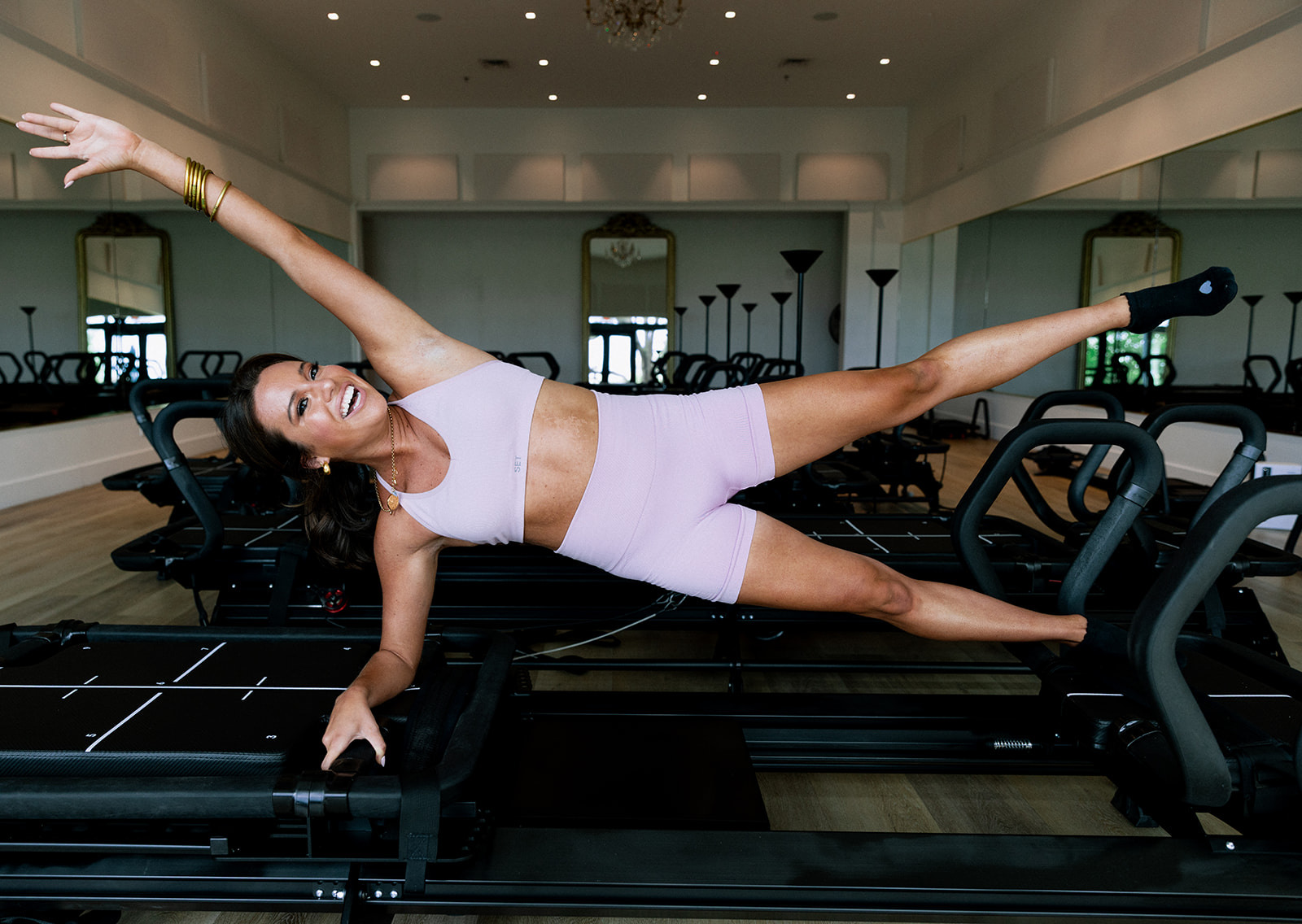
The Short Answer
Most people who have done both find Lagree more intense than a traditional Pilates class. That is by design, not by accident. But harder is not the same as better, and the more useful question is what that intensity is actually doing and whether it matches what you want from a workout. This article gives you the honest version, so you can decide for yourself.
The reason the two feel so different comes down to how they were built and what they were built for. They share a family tree, which is why people compare them in the first place. They diverge in purpose, which is why the comparison so often surprises people who assume one is just a more intense version of the other.
A Shared Lineage
Lagree grew directly out of the Pilates tradition. Sebastien Lagree developed his method while teaching Pilates in Los Angeles, using the Pilates reformer as his starting point before rebuilding it into something with a different goal. That shared origin is why both methods use spring resistance, controlled movement, and a strong emphasis on the core. If you have done Pilates, a lot of the underlying vocabulary of Lagree will feel familiar, even as the experience feels much more demanding.
Understanding that history matters, because it explains why the question is not really Pilates versus Lagree as rivals. It is two related methods that took the same foundation in two different directions.
It Comes Down to Resistance and Time Under Tension
Lagree deliberately turned up two dials. The first is resistance. The Megaformer uses significantly heavier spring tension than a Pilates reformer, which is calibrated to assist and refine movement rather than to maximally load it. On the Megaformer, the springs are there to make the muscle fight, set after set.
The second dial is time under tension. Lagree holds one strict, slow tempo throughout the class, roughly two seconds in each direction, with no momentum and no rest between repetitions. Sets run 45 to 90 seconds, long enough to take the muscle to genuine fatigue. Time under tension is one of the most important variables in building strength, and Lagree maximizes it more deliberately than almost any other group format.
Put those two together, heavier load held under tension for longer, and you get the deep, sustained muscular burn that makes Lagree feel harder than Pilates. The shaking you feel partway through a long set is the muscle working at its limit. In Lagree, that shake is treated as useful information, a sign the method is doing exactly what it was designed to do.
Pilates assists the movement so you can refine it. Lagree resists the movement so you have to fight for it. Same lineage, different intent.
Harder Is Not the Same as Better
This is the part worth slowing down on. Pilates is a meaningful method with a long, well-earned tradition. It is exceptional for movement quality, flexibility, rehabilitation, posture, and joint health, and it produces real, lasting results in the things it was designed to do. For many people, especially those focused on recovery or mobility, Pilates is the right choice, full stop.
Lagree was built with a different goal: physical transformation through maximum time under tension and minimum joint impact. It prioritizes building lean muscle and changing body composition. Neither method is superior to the other. They answer different questions. We go deeper on this in our post on Lagree and Pilates as two methods worth understanding, which is worth reading if you are genuinely trying to choose.
What the Intensity Actually Feels Like
In a Lagree class, the work is continuous. You move slowly, you stay in the hardest part of the range, and you do not get the natural pauses that lighter, faster formats allow. For 45 minutes, your muscles are under near-constant load, transitioning quickly from one exercise to the next so the tension rarely fully releases. That sustained demand is why people describe Lagree as one of the hardest 45 minutes they have done.
It is also why the results show up quickly. Intensity and efficiency are two sides of the same coin here. The same quality that makes Lagree feel hard is the quality that makes it productive in a short window of time, which is part of why it appeals to people who do not have an hour and a half to give to a workout.
Worth saying clearly: harder does not mean inaccessible. The intensity in Lagree comes from tempo and resistance, both of which you control. A first-timer and a longtime member can take the same class, because each works at the level that challenges them. You are never asked to keep up with the person beside you. You are asked to work at your own edge.
Which One Is Right for You
If your goals are flexibility, gentle strength, rehabilitation, or a movement practice that prioritizes precision and joint health, Pilates is an excellent fit and does exactly what it set out to do. If your goals are visible strength, lean muscle, body composition change, and a demanding workout you can do a few times a week without accumulating joint wear, Lagree is built specifically for that.
And many people do both. Pilates can be a recovery or mobility day alongside regular Lagree training, and the two complement each other well. The precision you build in Pilates makes Lagree more effective, and the strength you build in Lagree makes everything else easier. The right choice is the one that matches what you are trying to accomplish, not simply the one that feels hardest on a given day.
Frequently Asked Questions
Is Lagree harder than Pilates?
Most people find Lagree more intense, because it uses heavier spring resistance and a strict slow tempo that keeps muscles under tension for 45 to 90 seconds per set. Pilates uses lighter resistance focused on precision and movement quality, which feels different by design.
Is Lagree the same as reformer Pilates?
No. Lagree is performed on the Megaformer, a machine inspired by the Pilates reformer but rebuilt with heavier resistance and a longer carriage for a more strength-focused workout. The two share a lineage but have different goals and feel quite different in class.
Why is Lagree so hard?
The difficulty comes from heavy resistance combined with a slow, continuous tempo that keeps your muscles under tension with almost no rest. That sustained load is what creates the burn and the shake, and it is exactly the stimulus that produces results.
Can a beginner start with Lagree?
Yes. Lagree is scalable, and our instructors modify every movement so beginners can work at their own level safely. The intensity comes from effort and tempo, both of which you control as you learn.
Should I do Pilates before trying Lagree?
It is not required. People who come from Pilates often adapt quickly because they already understand controlled movement and core engagement, but many members start Lagree with no prior experience at all.
About FORM Charleston
FORM is a female-owned, certified Lagree Fitness studio with locations at 320 Broad Street in Downtown Charleston and 725 Coleman Boulevard in Mount Pleasant. Classes run 45 minutes on the Megaformer, high intensity and low impact, in small groups built for personalized coaching. New to FORM? The first-timers page covers everything you need before your first class, including what to expect, what to wear, and what to tell your instructor.
Book your first Lagree class at formcharleston.com
Disclaimer: Results vary by individual. This content is for informational purposes only. Consult a healthcare professional before beginning any new fitness program.